
Why This Works
Understanding the mechanism behind stress reduction
Meditation has been practised for thousands of years.
Modern physiological and neuroimaging research now helps explain why certain approaches reliably reduce measurable stress markers and support emotional regulation.
The Deep Dive Method™ is built on a simple premise:
Stress is physiological. So the solution must be physiological
Stress is not just a feeling
Stress is a biological response.
When pressure is perceived — physical, emotional, or cognitive — the sympathetic nervous system activates its fight or flight response.
➜ Heart rate rises
➜ Cortisol and adrenaline increase
➜ The body prepares for action
In short bursts, this response is adaptive. But when activation becomes sustained, stress accumulates...
The resulting chronic sympathetic dominance is strongly associated with sleep disruption, anxiety disorders, cardiovascular strain, and immune dysregulation.
The solution? Reducing stress requires shifting the underlying nervous system state — not just managing symptoms.


Effort sustains actvation
Many meditation techniques rely on sustained attention, monitoring, or cognitive control.
These are valuable skills. But effort activates executive networks in the prefrontal cortex.
➜ Activation maintains alertness
➜ Alertness sustains sympathetic tone
If the aim is deep restoration, effort can unintentionally maintain activation.
The Deep Dive Method™ removes effort from the mechanism.


Deep rest is the mechanism
The body releases accumulated stress most effectively during deep physiological rest.
Controlled metabolic studies on self-transcending meditation have observed:
✔ Reduced oxygen consumption
✔ Decreased respiratory rate
✔ Lower heart rate
✔ Reduced plasma cortisol
✔ Increased parasympathetic dominance
During effortless practice, cognitive load reduces and the nervous system shifts toward parasympathetic regulation (rest & digest).
This hypometabolic state is physiologically distinct from ordinary relaxation and neurologically distinct from focused attention, open monitoring and mindfulness practices.
Deep rest is not created. It emerges when effort is removed. This is why self-transcending meditation techniques are able to reduce stress at its source, rather than managing it at the level of the mind.


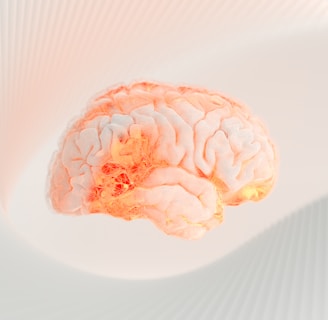
What happens in the brain
Functional MRI and EEG coherence studies on self-transcending meditation have reported:
✔ Reduced amygdala reactivity
✔ Increased functional connectivity between cortical regions
✔ Greater neural coherence across networks
Over time, these shifts are associated with:
✔ More stable emotional regulation
✔ Improved executive function
✔ Reduced baseline anxiety
These effects arise not from suppressing thought, but from allowing neural activity to settle toward more integrated patterns.


Stress release unfolds over time
We now know stress, emotions and stories are physically imprinted within the body. Recent stresses, fatigue and minor tensions at the surface level can be released in a single meditation, whereas more deeply engrained stresses may take weeks or even months to break down and dissolve.
Each time you meditate your body is in a different state. This means meditation experiences can vary - peaceful one day, active another, uneventful the next.
Consistency allows for cumulative autonomic adjustment, which means over time as your nervous system recalibrates your physiological 'stored stresses' reduce.
The good news? There is no such thing as a bad meditation. All experiences are valid and, importantly, beneficial.
From meditation to daily life
Meditation doesn't just work during the session.
As baseline autonomic balance improves:
✔ Sleep architecture stabilises
✔ Emotional reactivity decreases
✔ Recovery from stress accelerates
✔ Overall resilience strengthens
These changes reflect measurable shifts in autonomic regulation and neurochemical balance.
Meditation supports a more engaged life making you naturally more present and in-the-moment.




Why simplicity matters
The nervous system responds best to clarity and repetition.
We offer
✔ One method
✔ One structure
✔ No stacking techniques
✔ No complexity
By working with natural stress-release mechanisms rather than overriding them, practice becomes sustainable, predictable, and reliable over time.


“My Whoop data consistently shows lower heart rate and reduced stress levels. The correlation is undeniable.”
- Max
★★★★★
Understanding why meditation works is useful.
Experiencing it is where the real change happens.


Zero to Zen™ Online Course
2-Day In-Person Course
Gen Zen Meditation teaches a teacher-led, self-transcending meditation technique designed to reduce stress at its source.
© 2026 Daniel Conneely T/A Gen Zen Meditation®. All rights reserved. Deep Dive Method™, Deep Dive Arc™, and Zero to Zen™ are trademarks of Daniel Conneely.